He Didn’t Think He Belonged Here
Through Fire. Still Standing.
A Firefighter Burn Survivor Week Series (2026)
Each year in Crested Butte, burn-injured firefighters gather for a week unlike any other — Firefighter Burn Survivor Week, made possible by the DC Firefighters Burn Foundation, the Adaptive Sports Center, and dedicated partners who believe in the long road of recovery.
They come from different departments. Different states. Different stages of recovery.
But they share something few others understand.
This week is about challenge. Perspective. Rebuilding confidence in a body that has changed.
Most of all, it’s about not having to explain.
This is Brian’s story.....
He Didn’t Think He Belonged Here
Brian Diamond | Sterling Volunteer Fire Company
On February 16, 2024, Brian Diamond responded to a call in Loudoun County for a reported gas leak. Propane had been leaking into the basement of a home, and a woman was still inside.
Her roommate had tried to get her out. She wouldn’t leave.
Lieutenant Chris Kerkstra went in. Brian followed behind him.
The woman made it out of the house.
Then the house exploded.
Brian was thrown into one room. Chris was trapped in another. Brian suffered burns over 26% of his body. Water from the engine company — aimed at the fire — happened to hit him, extinguishing the flames on his gear. Disoriented and exhausted, he began climbing, searching for a way out. When the rescue company came around to the back of the house, they saw him waving his arm — giving everything he had left to be seen. They placed a ladder and pulled him to safety.
He was transported to MedStar, where doctors saved his life.
But survival was only the beginning.
Brian will tell you the physical pain was intense. But for him, the hardest part of recovery wasn’t the pain — it was the dependence.
He had always been capable. Independent. The one who showed up to help others. Now, he needed help putting on socks. Showering. Using the bathroom.
“The greatest day of my new life,” he said, “was gaining bathroom independence.”
It’s not something people usually talk about publicly, but after a burn injury, those small victories matter more than almost anything else. Putting on his own socks felt like progress. Showering alone felt like freedom.
From February until May, his wife Lisa was his steady ground. The nurses taught her how to care for his wounds, and she took on everything without hesitation. Still, for Brian, that shift was difficult. He hadn’t imagined that when they got married, she would one day have to care for him in that way.
“It wasn’t strength I gained,” he reflected. “It was humility. Gratitude. I’m so humbled by what she did for me.”
Brian is in a unique position. He’s not a career firefighter — he’s a volunteer. By trade, he’s a teacher in the same county where he serves.
When he was invited to Firefighter Burn Survivor Week in Crested Butte, he hesitated.
Most of the men attending are career firefighters. Brian is quiet by nature, not someone who naturally steps into the center of a room. He questioned whether he truly belonged there.
Once again, Lisa encouraged him to go.
He’s glad she did.
A few nights into the week, the group sat around a dinner table sharing their experiences — the injuries, the hospital stays, the medications, the hallucinations, the side effects that no one really prepares you for. Some of it was heavy. Some of it was raw.
And some of it was unexpectedly funny.
For the first time since his injury, Brian found himself laughing about things that once felt humiliating. Around that table, no one needed an explanation. No one looked uncomfortable. Everyone understood.
“It normalized it,” he said. “It made it less shameful.”
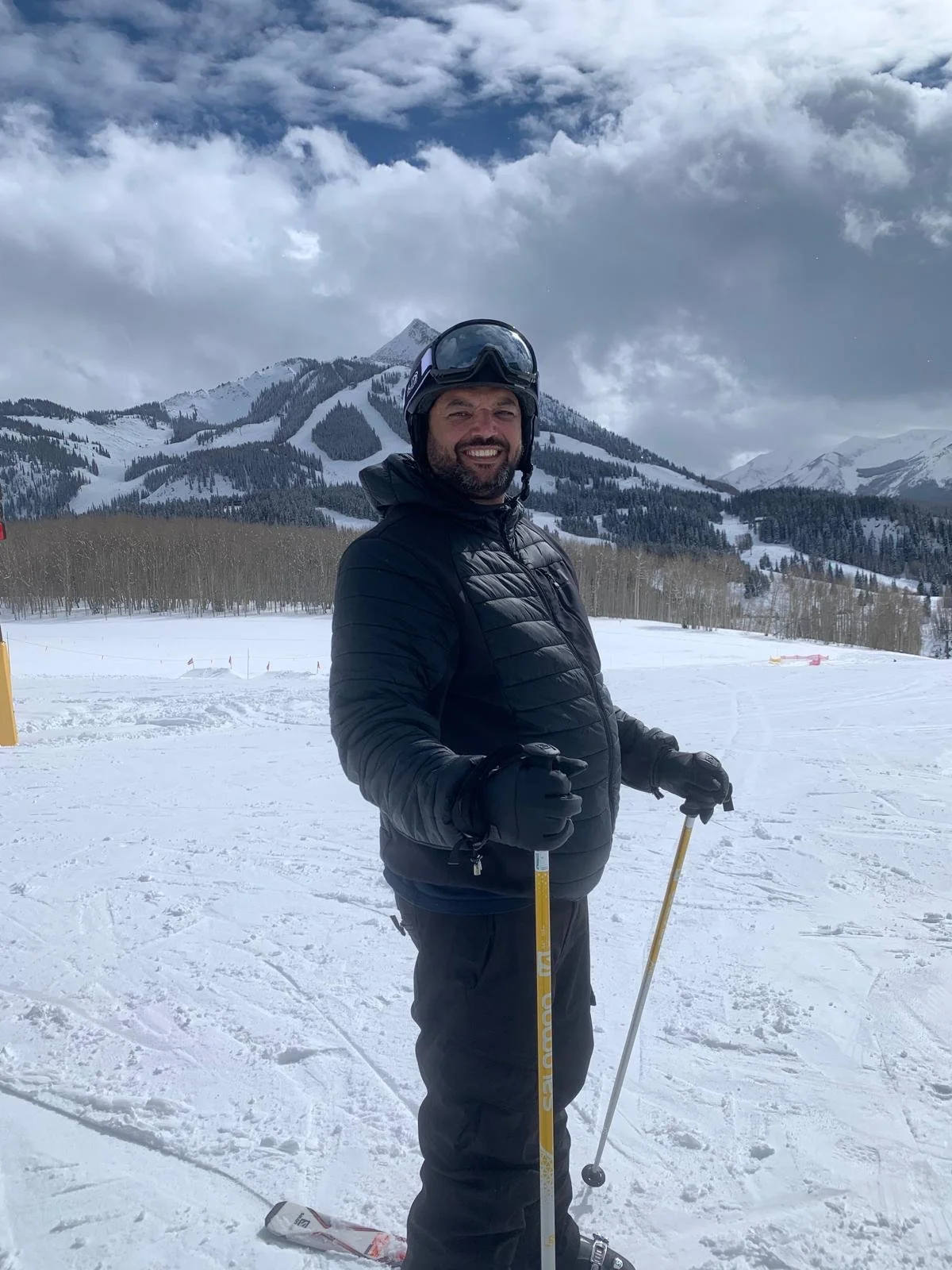
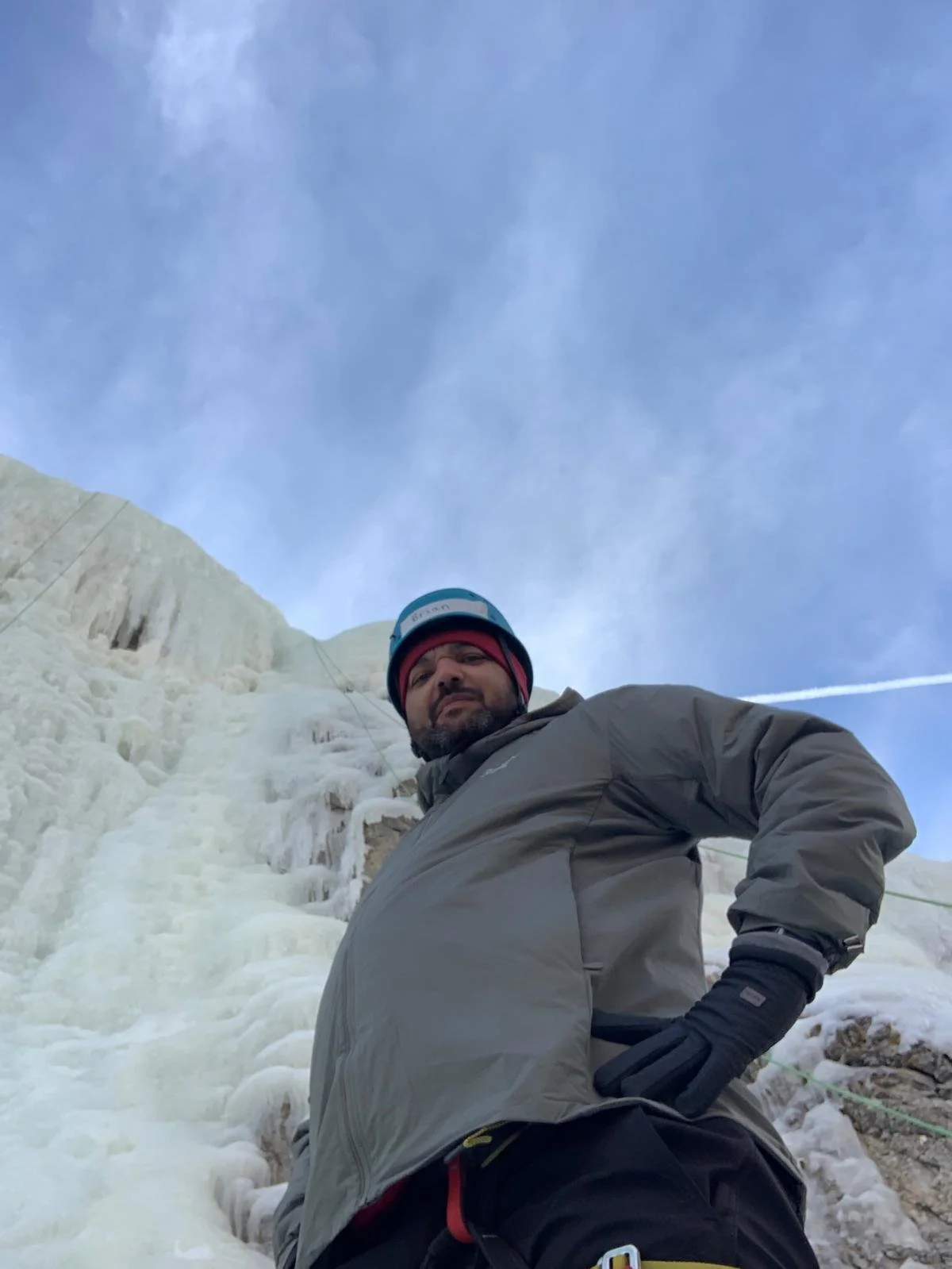
That organic connection — not a formal therapy session, just a group of men hanging out — meant more than he expected. The conversations weren’t forced. They happened naturally, between skiing, ice climbing, and sitting around together at night.
It was brotherhood in its simplest form.
Now, back home, Brian is teaching again. Life has resumed in many ways. But another decision waits.
Does he return to volunteering at the fire station?
He feels the pull in both directions. He respects the job deeply. He values serving his community. He knows the county invested in him. And being part of the fire service — volunteer or career — carries meaning.
But he also came very close to losing everything.
Spending more time with his family feels different now.
That tension is real.
What this week gave him wasn’t necessarily an answer — but it reminded him why the fire service matters. It reminded him that he belongs in that community, regardless of the title on his badge.
For anyone hesitant about coming to Firefighter Burn Survivor Week — especially volunteers who may feel like outsiders — Brian’s advice is simple:
Give it a try.
It’s not about where you came from. It’s not about whether you’re career or volunteer. It’s about shared experience. About not having to explain. About realizing you’re not alone in what you’re carrying.
When he gets home, Lisa will ask how it was. She’s been following along, watching the photos and updates. She already knows pieces of the story.
He’ll tell her she was right.
It was a good idea to come.
And sometimes, healing starts with someone who knows you well enough to push you when you’re not sure you belong.
Firefighter Burn Survivor Week exists because people choose to show up.
When a firefighter is injured, the recovery doesn’t end at the hospital doors. It continues in places like Crested Butte — where healing looks like challenge, connection, and community.
Help us make sure the next firefighter has a place to land.
The Foundation
Founded in 2004 by active and retired Washington, D.C. firefighters, the D.C. Firefighters Burn Foundation stands beside injured firefighters and burn survivors from the moment of injury through every phase of recovery.
Through direct support, peer connection, and transformative programs like Firefighter Burn Survivor Week, we help ensure no one walks this road alone.
